November 2, 2026
Control Platform Panel Sourcing: Trends Reshaping Buyer Decisions
A trend-focused look at control platform panel sourcing for B2B buyers: what is changing in tolerance expectations, documentation, material traceability, and supplier qualification, and how to turn each shift into a concrete sourcing decision.
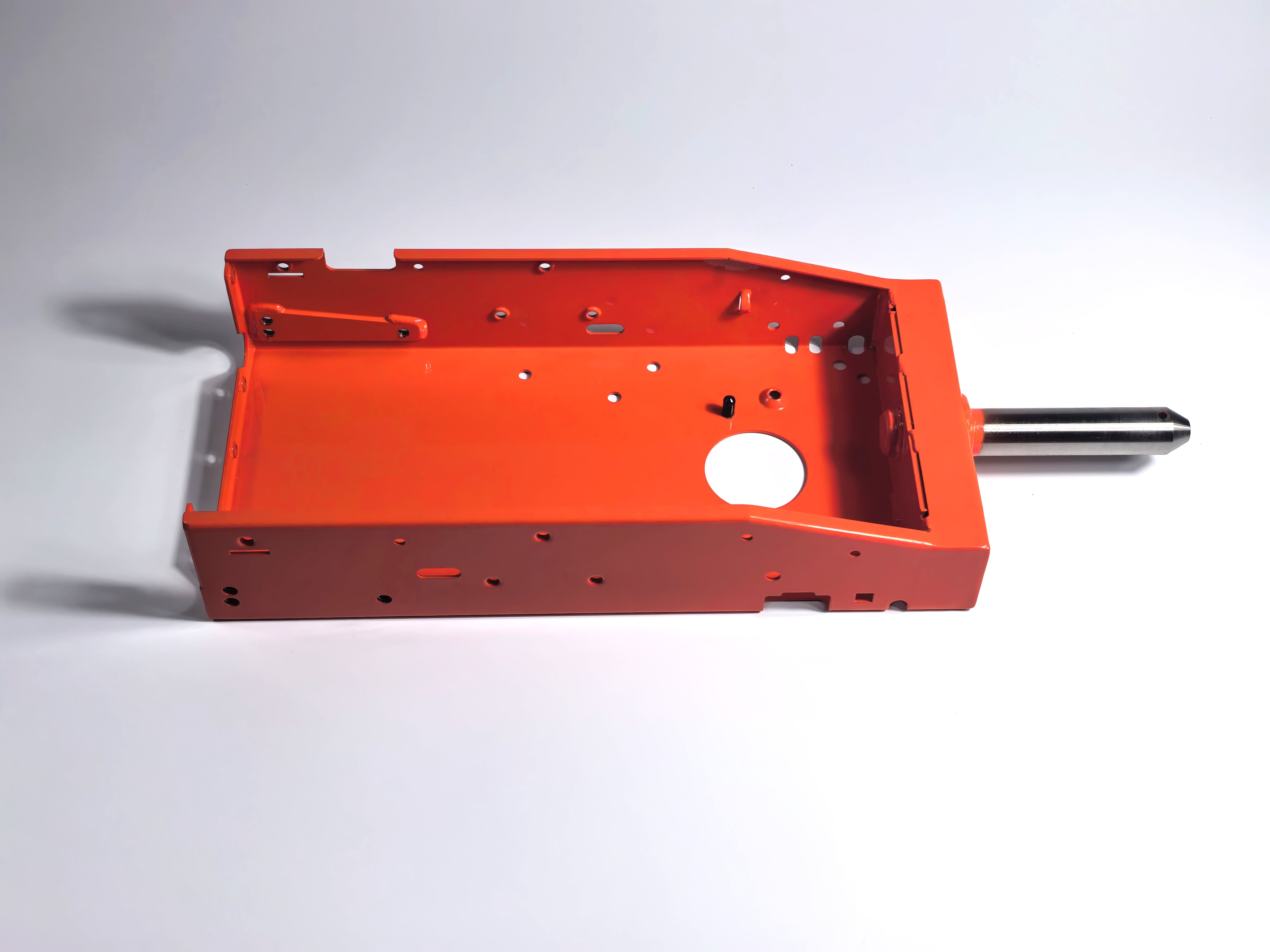
Why control platform panel sourcing is being re-evaluated now
A control platform panel is the rigid interface plate or enclosure face on which controls, displays, switches, or mounting hardware are located. In procurement terms it is rarely a standalone purchase: it usually ships alongside related mechanical parts such as a transmission system cover or a support bracket, and it must fit an assembly that was designed elsewhere. That dependency is the reason sourcing conversations around control platform panels have shifted from price-per-piece toward fit, documentation, and repeatability.
Three pressures drive the shift. Assemblies are becoming more integrated, so a panel that is slightly out of tolerance can stall a whole build. Buyer quality systems demand more paperwork per shipment. And sourcing teams are consolidating suppliers to reduce coordination load. Each trend below is framed as an observable direction rather than a forecast, followed by the decision it should trigger.
Trend 1: Tolerance expectations are moving from drawing-level to assembly-level
Historically, a control platform panel was accepted if it met the dimensions on its own drawing. Increasingly, buyers evaluate it against the assembly it joins: hole patterns that must align with mounted instruments, flatness that affects gasket seating, and edge quality that affects operator safety. This is a qualitative shift observed in how buyers write inquiries, not a measured market statistic.
What this means for your specification
- State the critical interface, not just the part. Identify which holes, edges, or faces mate with other components and flag them as critical-to-function.
- Separate cosmetic from functional tolerances. Over-tightening cosmetic tolerances raises cost without improving fit.
- Ask how flatness and hole position will be verified before quoting, not after the first article.
Decision rule: if a panel interfaces with two or more separately sourced parts, require a first-article inspection report that checks the mated dimensions, not only the panel's own drawing dimensions.
Trend 2: Documentation is becoming part of the product
Buyers increasingly treat material certificates, inspection records, and revision-controlled drawings as deliverables rather than optional extras. This matters most where panels sit in safety-relevant or regulated equipment, and it changes how suppliers are compared.
Practical implications
- Define the document package in the RFQ: material grade and certificate type, dimensional report scope, and whether sampling or 100% inspection applies.
- Require a drawing revision number on every inspection record so a shipment can be traced to the exact specification.
- Agree who holds master drawings and how changes are notified, including lead time for engineering changes.
Suppliers that cannot describe their document flow in specific terms are a risk signal, regardless of price. Ask for a sample inspection report before placing a first order.
Trend 3: Mixed-part sourcing is consolidating around fewer suppliers
Buyers who need a control platform panel often also need adjacent mechanical parts: a transmission system cover, an engine transmission bracket, or a support bracket. Consolidating these into one supplier reduces coordination and can improve fit consistency, because the same team controls the interfaces. The trade-off is dependency and reduced competitive tension on price.
| Approach | Advantage | Risk to manage |
|---|---|---|
| Single supplier for panel plus brackets and covers | Interface consistency, fewer purchase orders, simpler change control | Concentration risk; price benchmarking becomes harder |
| Separate specialists per part family | Deeper process expertise per part; competitive pricing | Fit disputes between suppliers; more incoming inspection |
| Dual-source critical panels only | Continuity of supply for the highest-risk item | Duplicate tooling and qualification effort |
Decision rule: consolidate when interfaces are tight and volumes are stable; keep separate sourcing when part families use fundamentally different processes or when you need price tension.
Trend 4: Material and finish choices are being questioned earlier
Buyers are asking about substrate grade, coating system, and corrosion exposure at the inquiry stage rather than at production. For control platform panels, the relevant questions are usually straightforward: what environment the panel sees, whether it is indoors or exposed, and whether dissimilar-metal contact with brackets or fasteners could cause galvanic corrosion.
Be careful with blanket claims. Corrosion performance depends on the specific substrate, coating thickness, and exposure conditions, so a supplier should be able to state the exact material and finish proposed and the basis for the recommendation. If a supplier answers with general assurances instead of specifics, request the detail in writing.
Trend 5: Supplier qualification is shifting from audit to evidence
Buyers increasingly ask for evidence of capability rather than descriptions of it. That means sample parts, dimensional reports, process descriptions for the specific operations the panel requires, and a clear statement of what the supplier does in-house versus subcontracts.
Questions that separate capable suppliers from confident ones
- Which operations for this panel are performed in-house, and which are subcontracted?
- How is a drawing change controlled once production has started?
- What inspection equipment is used for the critical dimensions, and how often is it calibrated?
- What happens when a first article fails: who decides, and on what criteria?
Answers that are specific, bounded, and consistent with the drawing are more useful than broad capability statements. Where a supplier cannot answer, treat that area as unverified rather than assumed.
How to turn these trends into a sourcing decision
The practical response is a short, sequenced evaluation rather than a long checklist:
- Define the interface. Mark critical-to-function features on the drawing and state the mating parts.
- Specify the document package. Material certificate, inspection scope, and revision control in the RFQ.
- Decide the sourcing structure. Single supplier versus specialists, based on interface tightness and volume stability.
- Qualify with evidence. Sample part plus inspection report before volume commitment.
- Plan for change. Agree notification timing and re-qualification triggers for drawing revisions.
For buyers sourcing a control platform panel together with a transmission system cover or support bracket, the most useful early step is a single drawing package that shows how the parts interface. It shortens quoting, reduces fit disputes, and makes supplier comparisons like-for-like.