November 2, 2026
Support Bracket Buyer Guide: Selection, Validation, and Supplier Evaluation
A procurement-focused guide to specifying and sourcing support brackets: define load and interface requirements, compare materials and processes, validate samples, and ask suppliers the right questions.
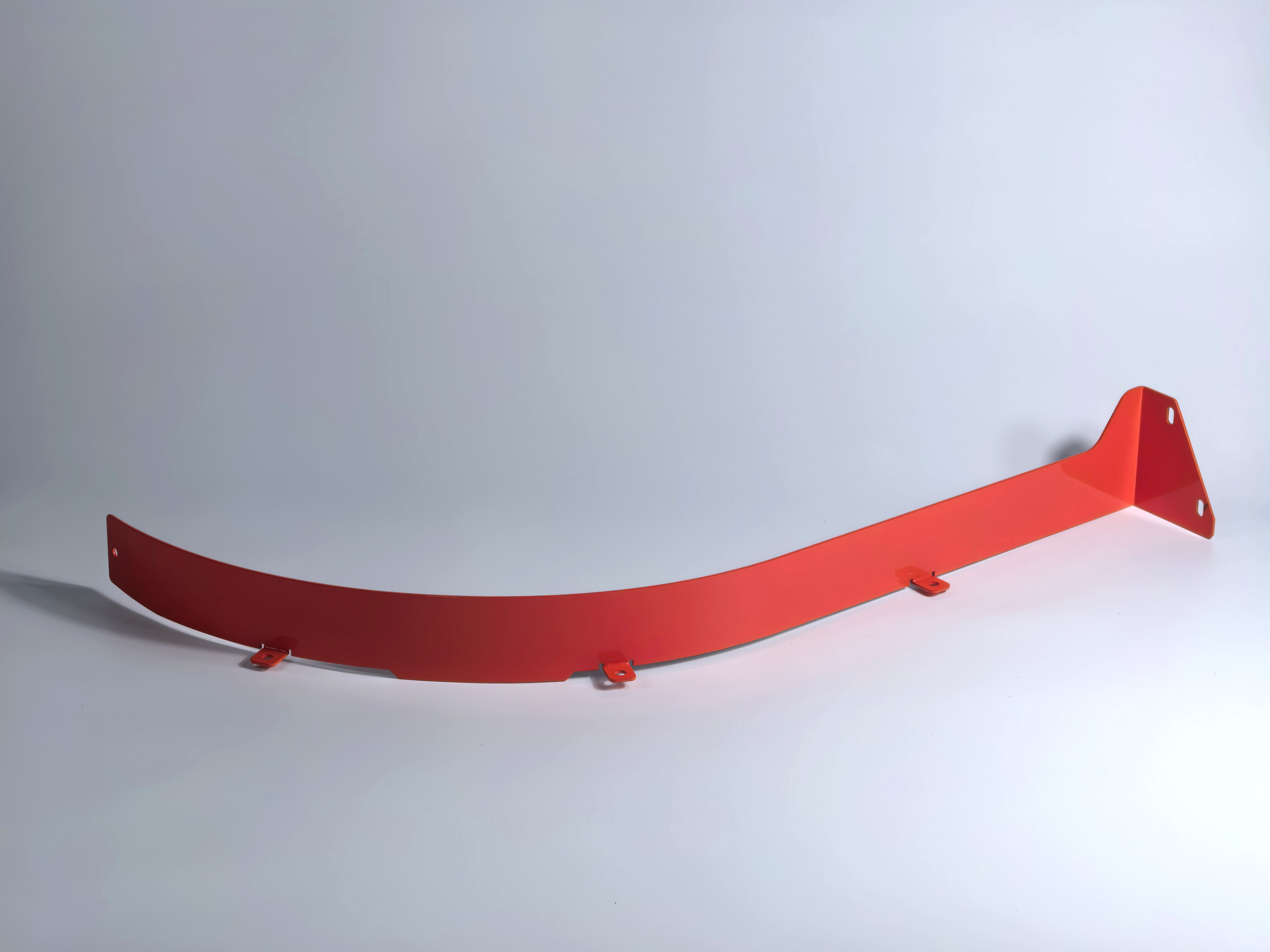
What a support bracket does and why the specification matters
A support bracket is a mechanical part that holds, positions, or stabilizes another component relative to a frame, panel, or assembly. It carries load, maintains alignment, and often defines how easily a part can be installed or serviced. Because brackets are usually low-cost relative to the systems they support, they are frequently under-specified — and that is where field failures, rework, and line stoppages begin.
This guide is for buyers moving from consideration to supplier evaluation. It covers the decisions that determine whether a bracket will work in service, what evidence to request from a supplier, and how to compare offers without relying on price alone. It does not assume a particular industry; the same logic applies to brackets used in transmission assemblies, control cabinets, and general mechanical equipment.
Start with function, not with a drawing
Before requesting quotes, write a short function statement: what the bracket holds, in which orientation, under what load, and what happens if it deflects or loosens. This statement drives every later trade-off. A bracket that only locates a cover has different requirements from one that carries a rotating component or reacts to vibration.
Decisions to lock down before sourcing
- Load type and direction: static weight, dynamic or vibration load, torque reaction, or occasional peak loads such as handling or transport shocks.
- Interface definition: hole positions, thread type, mating surface flatness, and whether the bracket must align with an existing cover or panel.
- Environment: indoor or outdoor, temperature range, moisture, dust, cleaning agents, and expected service life.
- Assembly method: welded, bolted, riveted, or clipped; and whether the bracket is installed manually or by automated equipment.
- Volume and change profile: annual quantity, expected design changes, and whether tooling investment is justified.
If any of these are unknown, mark them as open items rather than letting a supplier assume values. Assumptions made at quotation stage often become disputes at inspection.
Material and process selection: the real trade-offs
Support brackets are commonly made from steel, stainless steel, or aluminum, and produced by stamping, bending, welding, machining, or a combination. Each choice changes strength, corrosion behavior, weight, tooling cost, and lead time. The table below summarizes the practical trade-offs buyers should discuss with engineering.
| Option | Typical fit | Trade-offs to verify |
|---|---|---|
| Carbon steel, stamped and bent | High-volume brackets with moderate loads and painted or coated finish | Tooling cost and lead time; corrosion protection depends on coating quality; springback affects hole alignment |
| Carbon steel, welded assembly | Larger or low-to-medium volume brackets with complex geometry | Weld distortion and heat effects; inspection of weld quality; more labor content |
| Stainless steel | Moisture, washdown, or corrosion-sensitive environments | Higher material cost; different forming behavior; galling risk on threaded or sliding surfaces |
| Aluminum | Weight-sensitive brackets with moderate loads | Lower stiffness than steel; galvanic corrosion risk at dissimilar-metal joints; thread strength in thin sections |
| Machined from bar or plate | Low volume, tight tolerances, or prototypes | Higher unit cost at volume; longer cycle time; design freedom for complex features |
Two trade-offs deserve explicit attention. First, stiffness versus weight: increasing thickness or adding a gusset can solve deflection, but it may interfere with adjacent parts or add cost. Second, coating versus base material: a coating can delay corrosion but not compensate for an inadequate material choice in a wet environment. Ask the supplier to state which assumption drives their recommendation.
How to write a bracket specification that suppliers can quote accurately
A useful specification package contains more than a 3D model. It should include the function statement, a drawing with critical dimensions and tolerances, the interface control drawing for mating parts, material and finish requirements, and acceptance criteria. Mark which dimensions are critical to fit or function and which are reference only.
Items that are often missing
- Thread specifications and whether threads are cut, rolled, or formed.
- Flatness or straightness requirements on mating surfaces.
- Allowed burr size and edge condition.
- Surface finish and coating thickness range, with the standard used for verification.
- Marking, packaging, and traceability requirements.
- Sample quantity and approval process.
If a requirement cannot be measured at incoming inspection, it is difficult to enforce. For each critical characteristic, agree on the measurement method and the instrument before production begins.
Comparing suppliers: evidence to request
Supplier evaluation should focus on whether the supplier can demonstrate control over the processes that matter for your bracket. Generic capability statements are weak evidence. Ask for process-specific information and verify it during sample review.
Questions worth asking
- Which operations are performed in-house and which are subcontracted? For subcontracted finishing, how is the finish verified?
- What is the first-article inspection process, and what report format is provided?
- How are critical dimensions measured, and with what equipment?
- How is material traceability maintained from incoming stock to shipment?
- What is the change notification process if a drawing, material, or process changes?
- How are nonconforming parts handled, and what corrective-action evidence is available?
For brackets that interact with a transmission system cover or a control platform panel, also ask how the supplier checks interface fit with the mating part. A bracket that meets its own drawing but does not align with the cover or panel creates assembly problems downstream.
Sample and first-article validation
Samples are not a formality. Use them to test the assumptions in the specification, not just to confirm that the supplier can produce a part. A practical validation sequence:
- Dimensional check against the drawing, with critical characteristics measured and recorded.
- Fit check with the actual mating component or a verified interface gauge.
- Assembly trial under the intended fastening torque and sequence.
- Visual and coating inspection, including edges, threads, and hidden surfaces.
- If relevant, a load or vibration check agreed in advance with engineering.
Record the results and compare them with the acceptance criteria. If a deviation is accepted, document it as a concession with a defined limit, not as a verbal understanding.
Warning signs during sourcing
- The quotation does not reference the drawing revision or material specification.
- Critical tolerances are quoted as "standard" without a stated value.
- The supplier cannot explain how coating thickness or thread quality is verified.
- Sample parts are supplied without inspection records.
- Changes are proposed without a written change notification.
- Interface fit is treated as the buyer's responsibility only.
None of these alone disqualifies a supplier, but each should trigger a follow-up question before a production order.
Next steps for a bracket procurement decision
Consolidate the function statement, drawing package, and acceptance criteria into one document. Send the same package to every candidate supplier so offers are comparable. Score responses on specification compliance, evidence quality, and process control rather than price alone. Then validate with a sample built to the production process, not a hand-made prototype. For buyers sourcing related mechanical parts such as transmission system covers or control platform panels, apply the same discipline to interface dimensions and finish requirements across the assembly.