November 2, 2026
Transmission System Cover Buyer's Guide: Selection and Verification
A procurement-focused guide to specifying and sourcing transmission system covers, including material and design trade-offs, supplier evaluation questions, and sample validation steps.
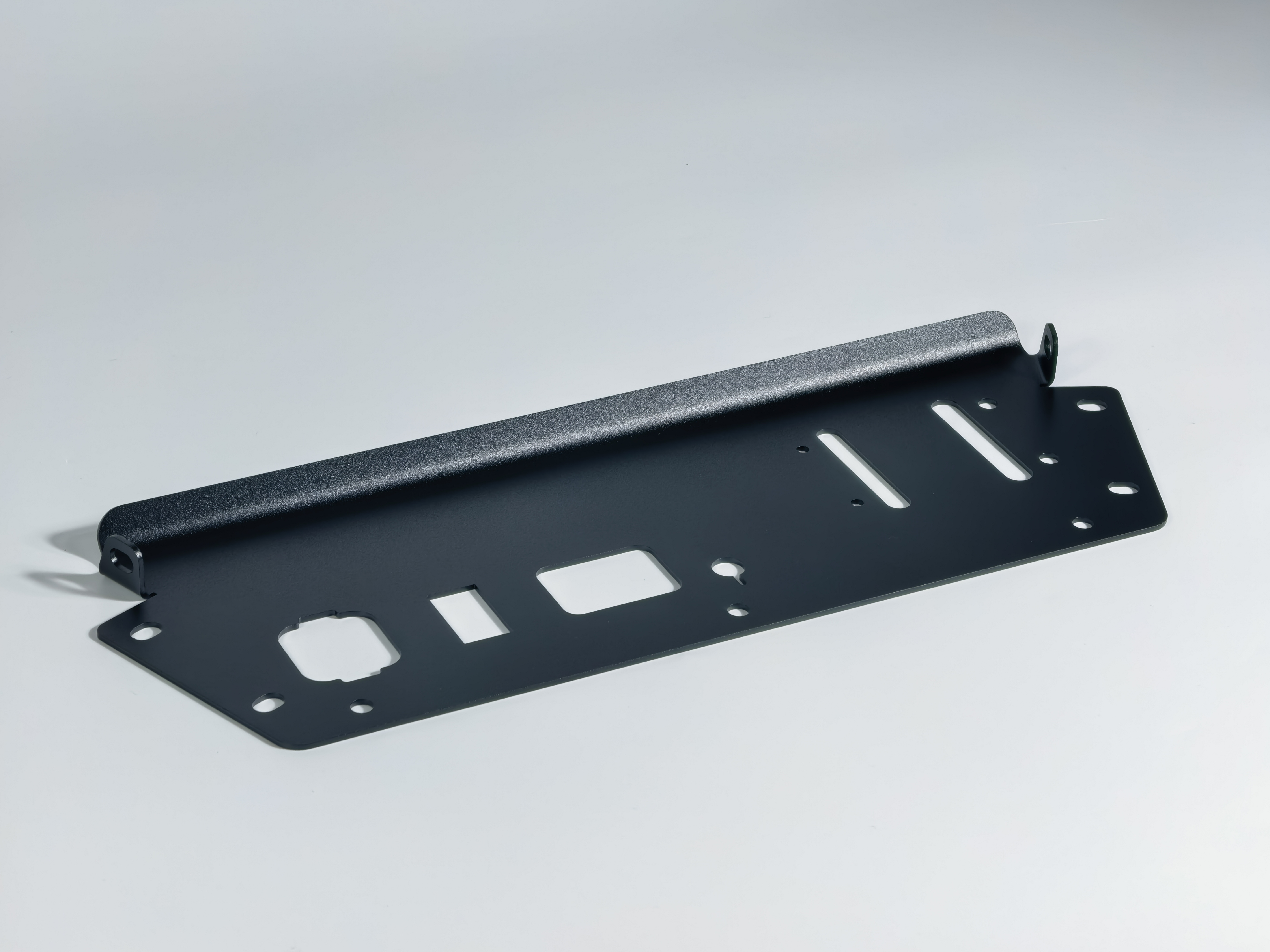
What a transmission system cover does and why the specification matters
A transmission system cover is a mechanical part that encloses or shields a transmission assembly. Its job is to keep contaminants out, retain lubricant where the design requires it, and protect nearby people and components from moving parts. Because the cover sits at the boundary between the transmission and the outside environment, small specification mistakes—an undersized flange, the wrong gasket groove, or a material that corrodes in service—show up as leaks, noise, or premature failures.
This guide is written for buyers moving from a rough requirement to a supplier decision. It covers the choices that change cost and performance, the questions that separate a capable fabricator from a reseller, and the checks to run before releasing a production order. It does not quote prices or lead times, because those depend on drawing complexity, volume, and the supplier's current capacity.
Start with the operating conditions, not the drawing
Buyers often send a drawing and ask for a quote. A better starting point is a short operating-condition brief. The answers determine material, coating, sealing method, and tolerance class before any supplier is contacted.
- Environment: indoor machine enclosure, outdoor equipment, washdown area, or dusty plant floor. Each changes corrosion and ingress requirements.
- Contaminants: coolant mist, metal chips, road spray, or fine abrasive dust. Particle size and whether the contaminant is wet or dry affect seal and gap design.
- Temperature range: continuous operating temperature and any peak excursions, including nearby heat sources.
- Vibration and load: whether the cover is a static shield or carries structural loads through mounting points.
- Service access: how often the cover is removed for inspection or maintenance, and whether fasteners must be captive.
- Regulatory or customer standards: any industry-specific requirements the finished assembly must meet. State them explicitly rather than assuming the supplier will infer them.
Write these conditions into the RFQ. Suppliers who ask follow-up questions about them are usually the ones who will catch interference or sealing problems before tooling is cut.
Material and process trade-offs for transmission covers
Most transmission system covers are made from sheet metal, cast metal, or molded plastic. The right choice depends on stiffness, weight, corrosion resistance, and the number of units expected over the product life.
| Option | Typical fit | Strengths | Limitations to verify |
|---|---|---|---|
| Stamped or formed sheet metal | Medium to high volume, moderate stiffness, complex mounting flanges | Good strength-to-weight ratio; tooling amortizes at volume; easy to add brackets and stiffening ribs | Corrosion protection depends on coating quality; thin gauge can drum or resonate under vibration |
| Cast metal | Complex geometry, high stiffness, lower volume where tooling cost is justified | Integrated bosses and ribs; good dimensional stability; can incorporate sealing grooves | Porosity risk; heavier; secondary machining may be needed for critical faces |
| Molded plastic or composite | Lightweight covers, non-structural shielding, corrosion-sensitive environments | Corrosion-free; design freedom; lower weight | Lower temperature ceiling; creep under sustained load; fastener pull-out strength must be checked |
For sheet metal covers, the fabrication route matters as much as the base material. Laser cutting and CNC bending suit low-to-medium volumes and design iteration. Stamping suits higher volumes once the design is stable. Welded assemblies can combine several formed parts, but weld distortion must be controlled on sealing faces. Ask the supplier how they plan to hold flatness on the gasket surface, not just what tolerance they can print on a certificate.
Coating choice follows the environment. Powder coating gives a durable finish for many indoor and outdoor applications, but it adds thickness that can affect close-tolerance fits. Zinc plating or zinc-nickel plating may be specified for corrosion protection on steel, with the exact standard and coating thickness written into the purchase order. Do not accept a generic "anti-rust treatment" description; specify the process and the acceptance criteria.
Sealing, fastening, and interface details that decide performance
Most field failures on covers trace back to interfaces, not the main panel. Three details deserve explicit attention in the drawing review.
Gasket and sealing surfaces
If the cover must keep lubricant in or contaminants out, define the gasket type, groove dimensions, and surface finish. A formed sheet metal flange may need a stiffening hem or a separate gasket carrier to avoid gaps under bolt load. Ask for the flatness specification on the sealing face and how it will be measured.
Fastener strategy
Thread-forming screws into sheet metal are common but lose clamp load after repeated removal. Captive screws, clinch nuts, or threaded inserts cost more but reduce maintenance errors. Specify the fastener type, thread size, and torque range, and confirm the supplier can install inserts without cracking the coating.
Mounting and support brackets
A cover that spans a large opening may need support brackets to resist vibration. The bracket design should be reviewed together with the cover, because bracket stiffness changes the cover's natural frequency and can shift noise problems rather than solve them. If the cover mounts to a control platform panel or frame, confirm hole patterns and datum references match the mating assembly.
Supplier evaluation: questions that reveal real capability
Public product listings and website claims are not evidence of process control. Use the RFQ and sample stage to test whether the supplier can explain how they will meet the specification.
- Can you provide a process flow for this part, from incoming material to final inspection?
- Which operations are done in-house, and which are subcontracted? If subcontracted, how is the subcontractor's output verified?
- What inspection equipment will be used for the critical dimensions, and what is the calibration status?
- How do you control coating thickness and adhesion, and what test method do you use?
- What is your change-control process if a drawing revision arrives after tooling is built?
- Can you share a first-article inspection report format before we place an order?
- How do you pack covers to prevent coating damage and deformation during transport?
Answers that stay general—"we have strict quality control"—are a warning sign. Answers that name equipment, standards, and responsible roles are more useful. For buyers sourcing through an online inquiry platform such as zhmetalplastic.com, treat the platform as a starting point for contact and confirm capability directly with the manufacturing team.
Sample and first-article validation before production
A sample that looks correct is not enough. Validate the sample against the functions the cover performs in service. A practical sequence:
- Dimensional check: measure critical interfaces—bolt hole pattern, sealing face flatness, overall envelope—against the drawing, not against a visual impression.
- Fit check: mount the cover on the mating assembly or a checked fixture. Confirm clearance to moving parts and access for tools.
- Seal check: if sealing is required, run the agreed leak or ingress test. Record the method and acceptance criteria in advance.
- Coating check: verify thickness and adhesion on representative areas, including edges and weld zones where coating is often thin.
- Vibration or handling check: where relevant, confirm fasteners stay tight and the cover does not resonate or rattle under expected operating conditions.
- Documentation review: compare the first-article inspection report to the drawing and the purchase order. Resolve every deviation before approving production.
Keep the approved sample as a reference. If the supplier changes material source, coating line, or a subcontracted operation, require a new first-article review.
Warning signs in quotes and samples
Some problems are visible before money changes hands. A quote that does not reference the drawing revision, or that lists material as "steel" without grade and thickness, will be hard to hold the supplier to later. Samples with coating scratches at the edges, distorted flanges, or loose inserts suggest handling and process control issues that will repeat at volume.
Also watch for suppliers who cannot explain why a tolerance is tight. If a dimension is marked critical on the drawing, the supplier should be able to say how it will be achieved and measured. If they propose relaxing a tolerance, ask what functional effect that has and get the change approved by your engineering team in writing.
Next steps for a transmission cover purchase
Prepare a requirement brief covering environment, sealing, mounting, and volume; attach a drawing with a revision number; and send it to two or three suppliers with the evaluation questions above. Compare not just the quoted price but the process explanation, inspection plan, and willingness to run a documented first-article review. That comparison is usually a better predictor of production quality than a sample alone.